
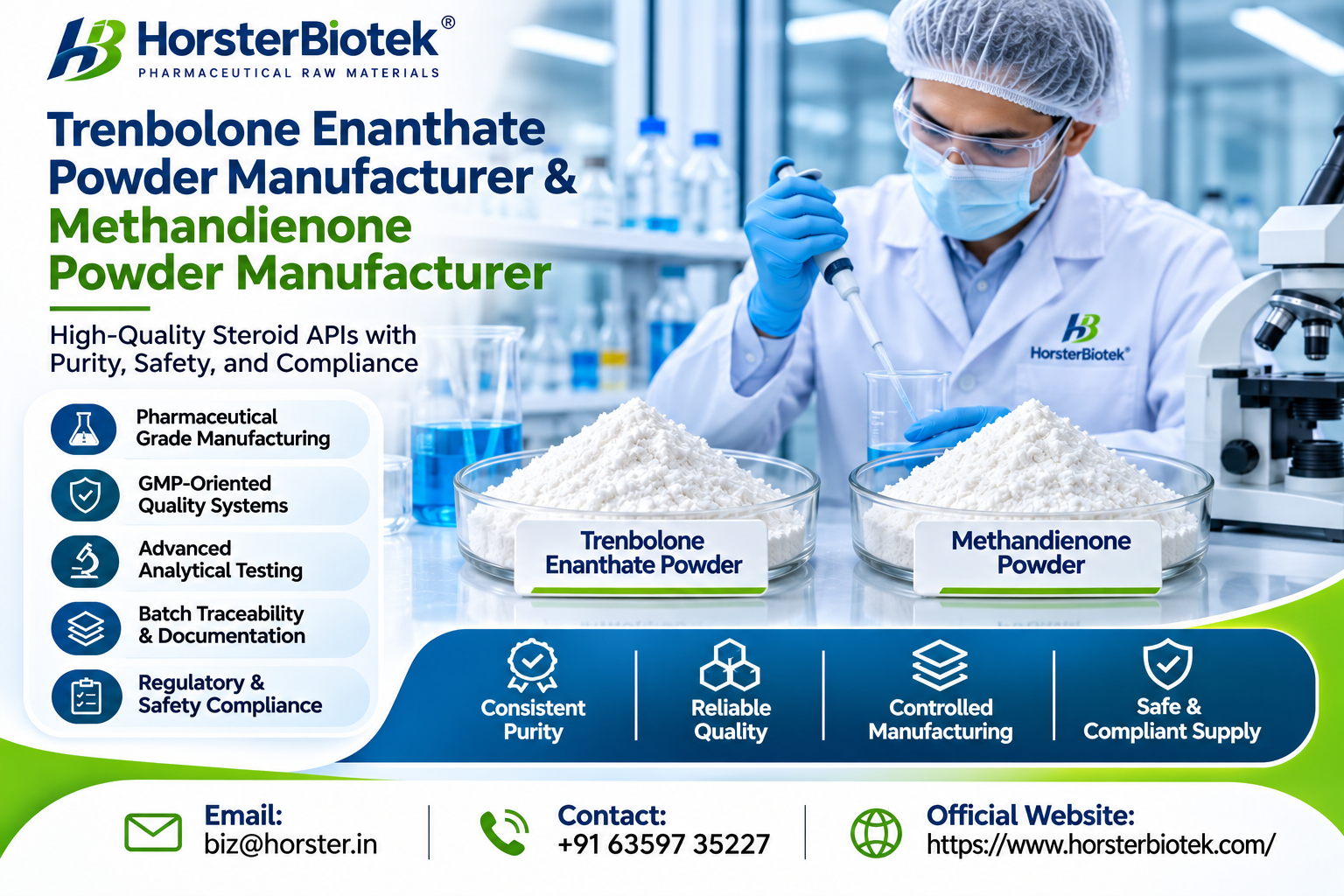
Protecting employees who handle biologically active substances is another essential responsibility for organizations operating in authorized pharmaceutical environments.
For a Trenbolone Enanthate Powder Manufacturer, occupational exposure controls are particularly important because the compound belongs to a category of potent anabolic-androgenic steroids.
Similar workplace safety considerations apply to a Methandienone Powder Manufacturer, although each substance has its own chemical properties, health risks, and regulatory requirements.
Powder handling can create opportunities for unintended exposure when appropriate controls are absent.
These concerns highlight the importance of workplace risk assessments, trained personnel, suitable containment, and responsible material management.
The broader industry message is that protecting workers must remain an integral part of pharmaceutical quality and compliance.
Understanding Trenbolone Enanthate and Its Risk Profile
Trenbolone enanthate is a synthetic anabolic-androgenic steroid associated with potent androgenic activity. It is not an established, widely approved medicine for human treatment.
Its biological activity makes accidental exposure and unauthorized use important safety concerns.
Organizations handling such substances must distinguish legitimate, legally authorized activities from unapproved pharmaceutical distribution or human consumption.
A Trenbolone Enanthate Powder Manufacturer operating within an authorized framework should consider the hazards associated with the substance and the controls required under applicable workplace and chemical safety regulations.
Relevant concerns may include unintended inhalation, skin contact, contamination of working surfaces, and exposure during material transfers.
The specific risks depend on the compound, exposure level, handling conditions, and available toxicological information.
Methandienone Requires Compound-Specific Safety Evaluation
Methandienone, also known as methandrostenolone, is a synthetic anabolic-androgenic steroid with a history of pharmaceutical use in certain settings.
Its use is associated with significant health concerns, including possible liver injury, cardiovascular effects, and hormonal disturbances.
For a Methandienone Powder Manufacturer, handling requirements should reflect the substance’s specific hazard profile and applicable legal restrictions.
Although methandienone and trenbolone enanthate belong to the same broad steroid category, they should not be treated as identical materials.
Their chemical properties, pharmacological characteristics, and potential exposure hazards differ.
A fundamental occupational safety principle states:
This approach supports more accurate risk assessments and responsible workplace decisions.
Why Powder Handling Requires Careful Exposure Assessment
Fine powders may create occupational exposure concerns when transferred, sampled, examined, or otherwise handled.
Depending on the material and activity, particles may become airborne or contaminate surfaces.
Potential exposure pathways include:
- Inhalation: Airborne particles may enter the respiratory system.
- Skin contact: Materials may come into contact with exposed skin.
- Surface contamination: Residues may accumulate on tools or working areas.
- Accidental ingestion: Poor workplace hygiene may contribute to unintended exposure.
- Cross-contamination: Inadequate separation can transfer residues between materials or work areas.
The presence of these potential pathways does not establish that every workplace activity creates the same level of risk.
Organizations should conduct appropriate assessments based on the substance and its actual handling conditions.
Engineering Controls Support Safer Work Environments
Engineering controls are an important part of occupational exposure prevention.
Depending on the assessed hazards, suitable containment equipment, enclosed handling arrangements, and appropriately designed ventilation systems may help reduce exposure.
The selection of controls requires qualified evaluation of workplace conditions and relevant safety requirements.
Personal protective equipment may provide additional protection, but it should not automatically replace suitable engineering controls.
A comprehensive workplace safety program may include controlled access, appropriate protective clothing, occupational hygiene procedures, and employee training.
These measures must be selected according to a documented risk assessment.
Employee Training Strengthens Operational Responsibility
Workplace safety depends on employee understanding as well as equipment design.
Personnel working with potent pharmaceutical ingredients should receive training appropriate to their responsibilities.
Training programs may address hazard communication, exposure prevention, emergency reporting, and correct use of approved protective equipment.
Employees should also understand the procedures for identifying damaged containers, unexpected contamination, or suspected exposure.
Clear communication helps prevent confusion during routine handling and unusual situations.
A useful safety principle explains:
Organizations should review training effectiveness and ensure that safety information remains accessible to authorized personnel.
Workplace Hygiene and Contamination Prevention
Responsible occupational safety programs include appropriate housekeeping and contamination-control measures.
Work areas handling potent materials should follow established cleaning, waste-management, and decontamination procedures.
Cleaning methods must be suitable for the substances involved and should not unnecessarily disperse potentially hazardous residues.
Organizations should avoid relying on ordinary housekeeping assumptions when dealing with biologically active powders.
Personnel should use authorized procedures for handling contaminated materials, cleaning equipment, and disposing of waste.
Where applicable, occupational exposure monitoring may also support the evaluation of workplace controls.
Such monitoring should use appropriate professional methods and scientifically justified assessment criteria.
Regulatory Compliance and Occupational Health Responsibilities
Steroidal substances may be subject to pharmaceutical, chemical, occupational health, and controlled-substance regulations.
The specific requirements vary according to jurisdiction, intended activity, and the legal classification of the compound.
Manufacturing authorization does not automatically establish compliance with every workplace safety requirement.
Organizations must separately consider employee protection, hazardous-material management, applicable documentation, and lawful substance handling.
Accurate safety records and appropriate oversight support accountability.
For substances with significant misuse potential, preventing unauthorized access and diversion is another important consideration.
These responsibilities should be addressed through legitimate quality and compliance systems.
Building a Safety-Focused Pharmaceutical Workplace
A strong occupational safety approach combines technical knowledge with organizational responsibility.
Instead of treating employee protection as a separate activity, organizations can incorporate exposure prevention into facility management, personnel training, and operational oversight.
Safety performance should be evaluated using meaningful evidence, including documented procedures, appropriate inspections, and corrective actions.
The objective is to establish working conditions that protect personnel while supporting lawful pharmaceutical activities.
Frequently Asked Questions (FAQs)
1. What is trenbolone enanthate powder?
Trenbolone enanthate is a synthetic anabolic-androgenic steroid compound. It is not a widely approved medicine for human treatment, and its legal status and handling restrictions depend on the jurisdiction.
2. What safety responsibilities apply to a Trenbolone Enanthate Powder Manufacturer?
A Trenbolone Enanthate Powder Manufacturer should address applicable legal authorizations, workplace hazard assessment, exposure prevention, employee training, and appropriate material-handling requirements.
3. What is methandienone powder?
Methandienone is a synthetic anabolic-androgenic steroid associated with significant health risks. Its distribution and use are regulated or restricted in many jurisdictions.
4. Why is occupational exposure prevention important for steroidal powders?
Preventing exposure helps protect employees from unintended contact with biologically active substances. Appropriate controls depend on the material’s hazards and workplace conditions.
5. How can pharmaceutical facilities strengthen employee safety?
Facilities can implement appropriate engineering controls, conduct workplace risk assessments, provide relevant training, maintain hygiene procedures, and comply with applicable occupational safety requirements.
Media Contact
Department: Media Relations & Pharmaceutical Raw Material Enquiries
Industry: Pharmaceutical Raw Materials and Chemical Ingredients
Contact: +91-6359735227
Email: biz@horster.in
Official Website: https://www.horsterbiotek.com/