
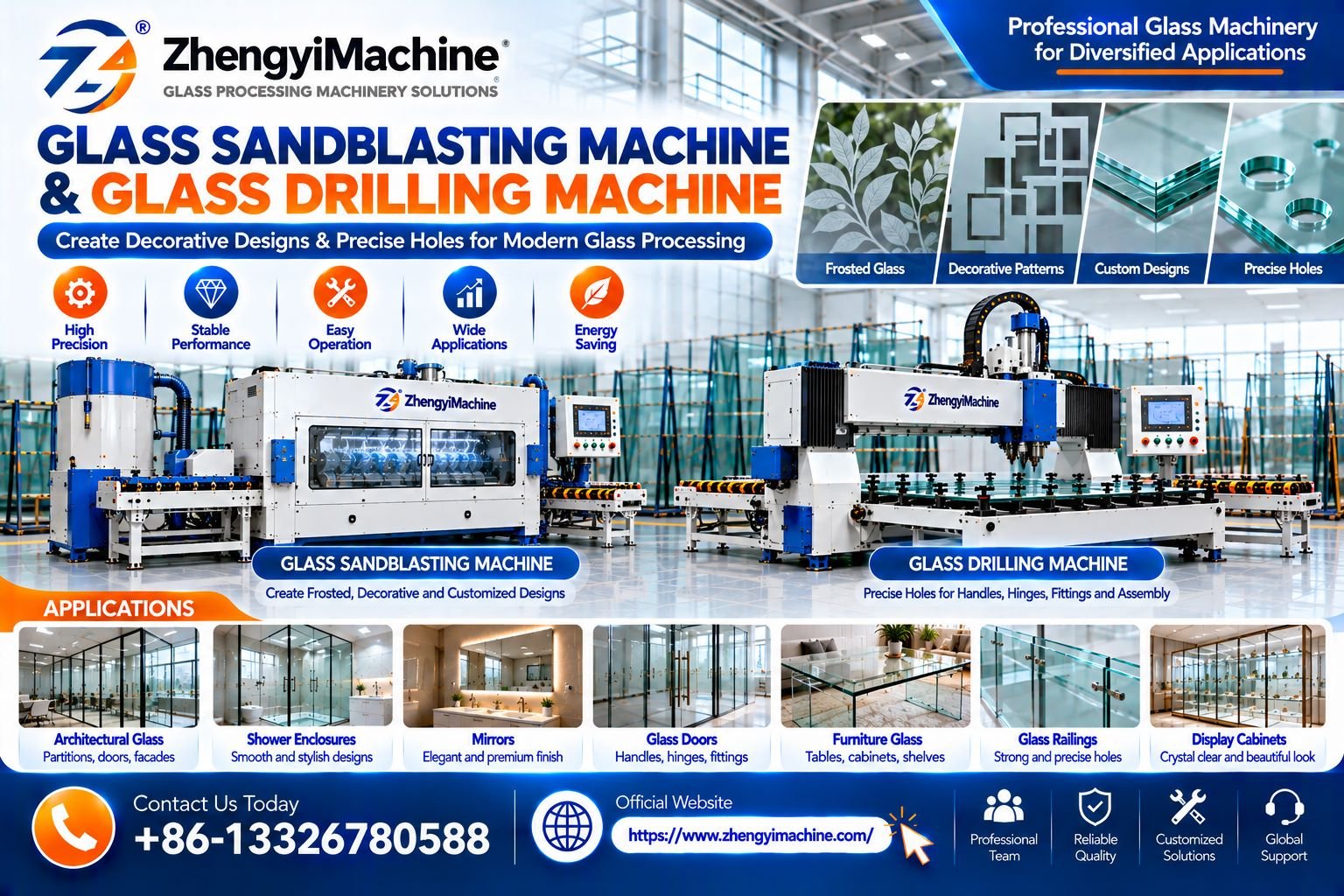
From decorative surface finishing to precision hole creation, equipment reliability directly influences manufacturing performance.
A modern glass machine supports specialized fabrication activities, allowing manufacturers to process glass according to defined technical requirements.
A Glass Sandblasting Machine creates frosted, textured, and decorative finishes through controlled abrasive treatment.
Meanwhile, a Glass Drilling Machine produces accurately positioned holes required for approved fittings, hardware connections, and specialized glass installations.
Although these machines perform different operations, they share an important requirement: proper maintenance.
For manufacturers, the challenge is maintaining equipment accuracy while preventing avoidable breakdowns, defective products, and production interruptions.
Why Preventive Maintenance Matters in Glass Processing
Glass processing machinery operates under demanding mechanical conditions.
Abrasive materials, rotating components, moving mechanisms, and processing residues can contribute to equipment wear.
Without appropriate maintenance, machinery may experience reduced processing consistency or unexpected operating problems.
Manufacturers should therefore establish maintenance procedures based on equipment specifications and actual operating conditions.
Important maintenance considerations include:
- Mechanical inspection: Identifying worn or damaged components.
- Tool condition: Checking abrasive materials and drilling tools.
- Equipment calibration: Verifying relevant positioning and operating settings.
- Dust management: Maintaining suitable extraction and containment arrangements.
- Cooling performance: Confirming appropriate conditions for compatible drilling operations.
- Maintenance records: Documenting inspections and corrective actions.
These activities support responsible equipment management and more consistent production.
Glass Sandblasting Machine Maintenance Supports Surface Consistency
A Glass Sandblasting Machine uses abrasive media to modify suitable glass surfaces.
The process can produce decorative textures, frosted finishes, and selected architectural patterns.
However, consistent results depend on appropriate equipment operation and abrasive management.
Worn blasting components, unsuitable abrasive conditions, or irregular material delivery may affect the appearance of finished glass.
Manufacturers should inspect relevant machine components according to approved maintenance procedures.
Abrasive Media Management
The type and condition of abrasive materials influence surface treatment.
Manufacturers should use approved media suitable for the equipment and intended glass application.
Blasting System Inspection
Relevant delivery components require inspection for deterioration, blockage, or other operating problems.
Dust Extraction Performance
Appropriate dust collection and containment arrangements help manage airborne processing materials.
Surface Quality Verification
Sample inspections can help identify uneven textures or visible finishing inconsistencies.
A practical manufacturing principle explains:
Professional maintenance helps manufacturers identify problems before they affect additional products.
Glass Drilling Machine Accuracy Depends on Tool Condition
A Glass Drilling Machine creates holes in compatible glass panels according to specified dimensions and positions.
Drilling accuracy is important for products that require approved brackets, handles, or mounting systems.
Tool wear, unsuitable operating parameters, or mechanical alignment problems can influence drilling quality.
Manufacturers should regularly assess the condition of drilling tools and related equipment.
Important technical considerations include:
- Drilling tool condition: Inspecting compatible drill bits for deterioration.
- Positioning accuracy: Confirming that hole locations match approved specifications.
- Cooling arrangements: Maintaining suitable cooling where required.
- Glass support: Ensuring panels remain properly positioned during processing.
- Equipment stability: Checking for abnormal movement or vibration.
An important engineering observation states:
Equipment should never be operated beyond its approved specifications.
Why Calibration Matters for Glass Manufacturing
Calibration and verification help manufacturers determine whether relevant machine functions remain within required operating limits.
Different glass-processing machines have different positioning and control requirements.
For drilling applications, dimensional checks may help confirm that holes are produced in the intended locations.
For sandblasting equipment, controlled process settings support consistent surface treatment.
However, calibration procedures must reflect the actual machine design.
Manufacturers should follow approved documentation and use qualified technical personnel for adjustments requiring specialized expertise.
Proper verification supports quality assurance but does not eliminate the need for final product inspection.
Identifying Equipment Problems Before Production Defects Spread
Equipment problems sometimes become visible through changes in finished product quality.
For example, uneven sandblasting patterns may indicate a need to investigate abrasive delivery or processing conditions.
Similarly, irregular drilling results may require inspection of tooling, positioning, or glass support.
Manufacturers should develop clear procedures for identifying these issues.
A structured approach may include:
- Inspecting the affected glass product.
- Reviewing the approved processing specifications.
- Assessing relevant equipment conditions.
- Arranging qualified technical inspection where necessary.
- Verifying corrective work before resuming production.
The purpose is to identify underlying problems rather than repeatedly adjusting machinery without adequate investigation.
Maintenance Records Improve Equipment Management
Accurate documentation supports organized industrial operations.
A maintenance record may include equipment identification, inspection findings, replaced components, and identified technical concerns.
These records help manufacturers evaluate recurring faults and coordinate repairs.
For facilities operating multiple machines, equipment histories can support decisions about maintenance priorities and spare-parts management.
Digital systems may simplify record organization, but the accuracy of the information remains essential.
Maintenance decisions should be based on verified equipment conditions and appropriate engineering judgment.
Spare Parts Availability Influences Production Continuity
Replacement components form an important part of machinery maintenance.
A glass machine may require specific mechanical, electrical, or processing components depending on its configuration.
Manufacturers should confirm spare-parts availability before investing in equipment.
For sandblasting systems, relevant consumables and approved replacement components may influence maintenance planning.
For drilling machines, suitable tooling and compatible mechanical components are important.
However, visually similar parts should not automatically be treated as interchangeable.
Replacement components must match the manufacturer’s specifications and equipment requirements.
Operator Training Supports Reliable Machinery Performance
Even advanced machinery requires employees who understand approved operating procedures.
Operators should recognize abnormal equipment behaviour and know when to report potential problems.
Training may include safe material handling, processing setup, routine inspection responsibilities, and emergency procedures.
Technical repairs should remain the responsibility of appropriately qualified personnel.
Manufacturers should also ensure that staff understand the limitations of different glass materials.
For example, conventional tempered glass generally cannot be drilled after tempering.
Correct processing decisions help protect equipment and reduce avoidable glass breakage.
Selecting Glass Machinery With Maintenance in Mind
Equipment selection should consider more than processing speed or advertised accuracy.
Manufacturers should evaluate maintenance accessibility, technical documentation, safety features, and service support.
Important purchasing questions include:
- Are compatible replacement components available?
- Are maintenance instructions clearly documented?
- Does the equipment support the required glass dimensions?
- Can qualified technicians access relevant components safely?
- Are suitable operator training arrangements available?
The preferred machinery should support the intended manufacturing processes while remaining practical to inspect and maintain.
Industry Outlook: Reliable Equipment Supports Consistent Glass Production
Glass processing businesses benefit from machinery that combines suitable manufacturing capabilities with dependable serviceability.
Sandblasting systems support selected decorative finishes, while drilling equipment enables precise openings for compatible installations.
Both require appropriate inspection, tooling management, and quality verification.
Manufacturers that integrate maintenance planning into production management can identify equipment concerns more effectively and support consistent fabrication standards.
Frequently Asked Questions (FAQs)
1. What is a glass machine?
A glass machine is industrial equipment designed to perform specific glass-processing operations, including cutting, grinding, drilling, polishing, washing, or surface treatment.
2. Why does a Glass Sandblasting Machine require maintenance?
A Glass Sandblasting Machine requires maintenance to support consistent abrasive delivery, appropriate dust control, equipment condition, and surface finishing quality.
3. How does tool wear affect a Glass Drilling Machine?
Worn drilling tools can contribute to unsuitable hole quality, increased processing difficulties, or glass damage. Approved inspection and replacement procedures are important.
4. Can preventive maintenance eliminate machinery breakdowns?
No. Preventive maintenance can help identify deterioration and reduce certain avoidable problems, but unexpected equipment failures remain possible.
5. What should manufacturers consider before buying glass-processing equipment?
Manufacturers should evaluate processing capabilities, equipment accuracy, safety features, maintenance requirements, spare-parts availability, and technical support.
Media Contact
Department: Sales, Product Information & Media Enquiries
Industry: Industrial Glass Machinery, Sandblasting & Drilling Equipment
Contact: +86-13326780588
Email: zhengyi@zhengyi.cc
Official Website: https://www.zhengyimachine.com/