
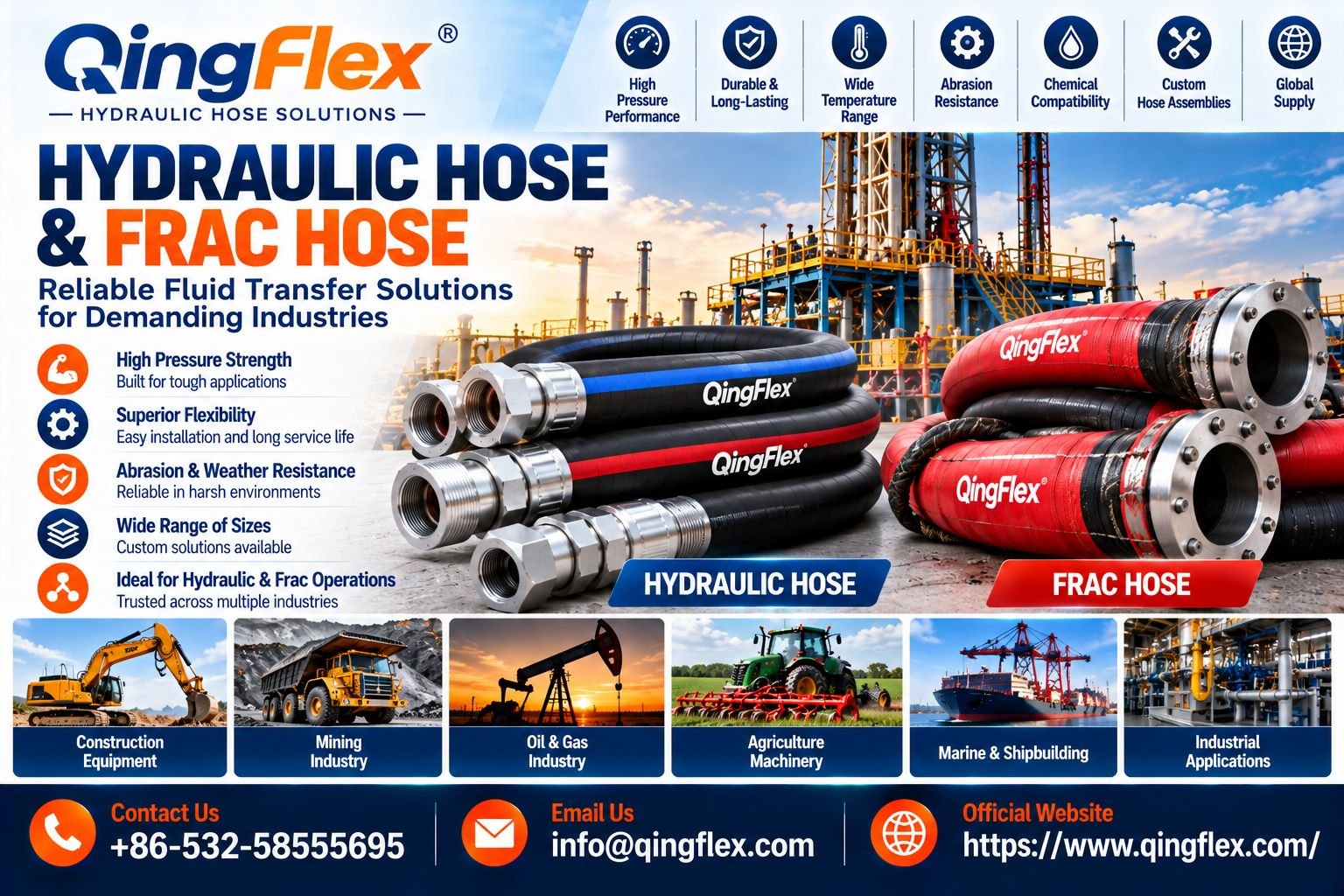
Reliable fluid-transfer equipment remains essential to industrial productivity, particularly in energy operations where equipment availability directly affects operational planning.
Among the components receiving increased attention is the Hydraulic Hose, which supports pressurized fluid movement in machinery, pumping equipment, and other industrial systems.
For hydraulic fracturing operations, specialized frac hose assemblies serve particular fluid-transfer functions where pressure conditions, fluid characteristics, and equipment compatibility require careful consideration.
While product durability is important, industrial buyers must also address a broader challenge: ensuring that suitable hose assemblies are available when equipment requires servicing or replacement.
This has placed greater emphasis on procurement coordination, inventory identification, and supply-chain preparedness.
The objective is not simply to purchase more hoses. It is to maintain access to the correct products while avoiding unnecessary stock, incompatible replacements, and preventable equipment interruptions.
Why Hose Availability Matters in Hydraulic Fracturing
Hydraulic fracturing operations depend on interconnected pumping and fluid-handling equipment.
These systems may include pumps, manifolds, valves, rigid piping, and flexible hose connections serving different functions.
When a critical component requires replacement, equipment availability can become an important operational concern.
A replacement hose must satisfy the intended application’s specifications rather than merely resemble the original product.
For example, a conventional hydraulic power hose cannot automatically replace a specialized fracturing-service hose, even when their external dimensions appear similar.
Differences in working pressure, internal construction, fluid compatibility, and end connections may make substitution inappropriate.
For procurement teams, this creates a practical requirement: accurate product identification must accompany reliable stock availability.
Product Traceability Becomes an Important Purchasing Consideration
Product traceability helps organizations identify the specifications and relevant manufacturing information associated with industrial components.
For a Hydraulic Hose, useful records may include the product designation, dimensions, pressure rating, compatible fluid type, and applicable specifications.
Specialized hose assemblies may also require documentation identifying connection types, assembly configuration, and relevant inspection or testing information.
Traceability can provide several operational benefits:
- Accurate identification: Maintenance teams can distinguish between products designed for different applications.
- Replacement consistency: Purchasing departments can verify that replacement assemblies match approved equipment requirements.
- Inventory control: Warehouses can organize products according to specifications rather than appearance alone.
- Technical communication: Engineering teams can reference documented characteristics when discussing product selection.
- Quality review: Available records can help identify products requiring further inspection or verification.
However, traceability documents must accurately reflect the supplied product. Labels or records alone do not establish suitability or certification.
As a useful procurement principle states:
Managing Frac Hose Inventory Across Industrial Operations
Maintaining an appropriate inventory of specialized hoses requires coordination between purchasing, engineering, warehouse, and maintenance personnel.
A frac hose intended for one fluid-transfer service may not be appropriate for another.
Organizations should therefore classify inventory by application, technical specifications, and connection requirements.
Application-Based Stock Classification
Instead of grouping all flexible hoses together, warehouses can separate assemblies according to intended equipment functions.
This reduces the likelihood of incorrect product selection.
Clear Product Identification
Labels and inventory records should contain sufficient information to identify the hose and verify its intended use.
Where manufacturer requirements apply, identification and storage practices should preserve essential markings.
Replacement Availability
Critical equipment requirements can help determine which assemblies should be readily accessible.
Stock levels should reflect operational needs, purchasing lead times, and approved replacement arrangements.
Inventory Condition Monitoring
Stored products must remain suitable for service. Storage conditions, handling damage, and applicable shelf-life guidance should be considered before assemblies are issued for installation.
These practices support more organized maintenance preparation without assuming that every spare component remains serviceable indefinitely.
How Proper Storage Protects Hose Inventory
Industrial hoses can deteriorate while in storage if they are exposed to unsuitable environmental conditions.
Depending on the materials involved, excessive heat, sunlight, chemical exposure, mechanical compression, and inappropriate handling may affect product condition.
Storage areas should follow applicable manufacturer recommendations.
Hose assemblies should be protected against unnecessary deformation, contamination, and physical damage.
Fittings and exposed connections may require suitable protective measures to prevent contamination during handling or storage.
Warehouse personnel should also avoid storing hose coils in configurations that violate recommended bending limits.
A visually undamaged product should not automatically be assumed suitable for installation if its storage history or condition is uncertain.
Digital Inventory Records Improve Equipment Coordination
Digital inventory systems can help industrial organizations connect purchasing information with equipment requirements.
A structured product record may contain an internal item number, technical specifications, approved supplier information, storage location, and intended equipment application.
For businesses operating multiple sites, standardized records can reduce confusion between products that have similar descriptions but different technical characteristics.
Digital systems can also help teams identify which replacement components are available and which require purchasing approval.
Nevertheless, digital records must be maintained accurately.
An incorrect specification entered into an inventory system can create the same operational problems as an incorrectly labeled physical product.
A practical inventory principle explains:
Supplier Communication Supports More Reliable Purchasing
Industrial hose procurement depends on clear communication between buyers and suppliers.
Purchasing requests should include the specifications required to identify the intended product.
For specialized frac hose applications, this may include operating pressure, transferred medium, temperature conditions, assembly dimensions, connection details, and applicable design requirements.
Incomplete purchasing descriptions can lead to unnecessary clarification, unsuitable quotations, or incorrect product selection.
Suppliers should provide relevant technical documentation and identify product limitations where applicable.
Buyers should verify that proposed alternatives satisfy the approved engineering requirements before accepting substitutions.
This communication process supports accurate ordering and reduces avoidable discrepancies between procurement expectations and delivered products.
Evaluating the Total Cost of Hose Inventory
The financial impact of industrial hose procurement extends beyond the purchase price.
Organizations may also incur expenses associated with storage, handling, inspection, transportation, emergency purchasing, and equipment interruptions.
Excessive inventory ties up purchasing resources, while insufficient inventory can create delays when suitable replacement components are unavailable.
A balanced procurement strategy should consider:
- Critical equipment requirements and approved replacement specifications.
- Supplier delivery capabilities and purchasing lead times.
- Storage capacity and manufacturer preservation requirements.
- Inventory identification and documentation quality.
- The operational consequences of unavailable components.
This approach encourages purchasing decisions based on equipment requirements and overall operational value.
Industry Outlook: Smarter Supply Chains for Fluid-Transfer Equipment
The importance of hose reliability extends from manufacturing and installation to procurement, storage, and replacement planning.
For industrial organizations using high-pressure equipment, supply-chain readiness can support more consistent maintenance operations.
An appropriately selected Hydraulic Hose must be available, correctly identified, properly stored, and verified for its intended application before installation.
Similarly, specialized frac hose assemblies require procurement controls that recognize their distinct operating conditions.
The wider opportunity lies in connecting technical product information with practical inventory management.
Businesses that establish clearer purchasing records and replacement procedures can reduce confusion and strengthen their equipment-support processes.
Frequently Asked Questions (FAQs)
1. Why is inventory management important for Hydraulic Hose products?
Inventory management helps organizations maintain access to correctly specified replacement hoses, identify available products, and support planned equipment maintenance.
2. What is a frac hose used for?
A frac hose is used for specified fluid-transfer applications associated with hydraulic fracturing operations. Its suitability depends on the particular service, fluid characteristics, pressure requirements, and equipment connections.
3. How should industrial hoses be stored?
Hoses should be stored according to manufacturer recommendations, with protection against unsuitable temperatures, sunlight, chemicals, physical damage, and excessive bending.
4. What information should be included when ordering a replacement hose?
Purchasing information should identify the application, dimensions, operating requirements, fluid compatibility, connection specifications, and any applicable technical standards.
5. Can digital inventory systems improve hose procurement?
Yes. Accurate digital records can support product identification, stock monitoring, purchasing coordination, and replacement planning across industrial facilities.
Media Contact
Department: Media Relations & Industrial Product Enquiries
Industry: Industrial Hose Manufacturing and Fluid Transfer Solutions
Contact: +86-532-58555695
Email: info@qingflex.com
Official Website: https://www.qingflex.com/