Schools, universities, academic libraries, and training institutions require efficient building infrastructure to support daily educational activities. As campuses accommodate classrooms, administrative offices, laboratories, and resource centres across multiple floors, transportation planning becomes increasingly important.
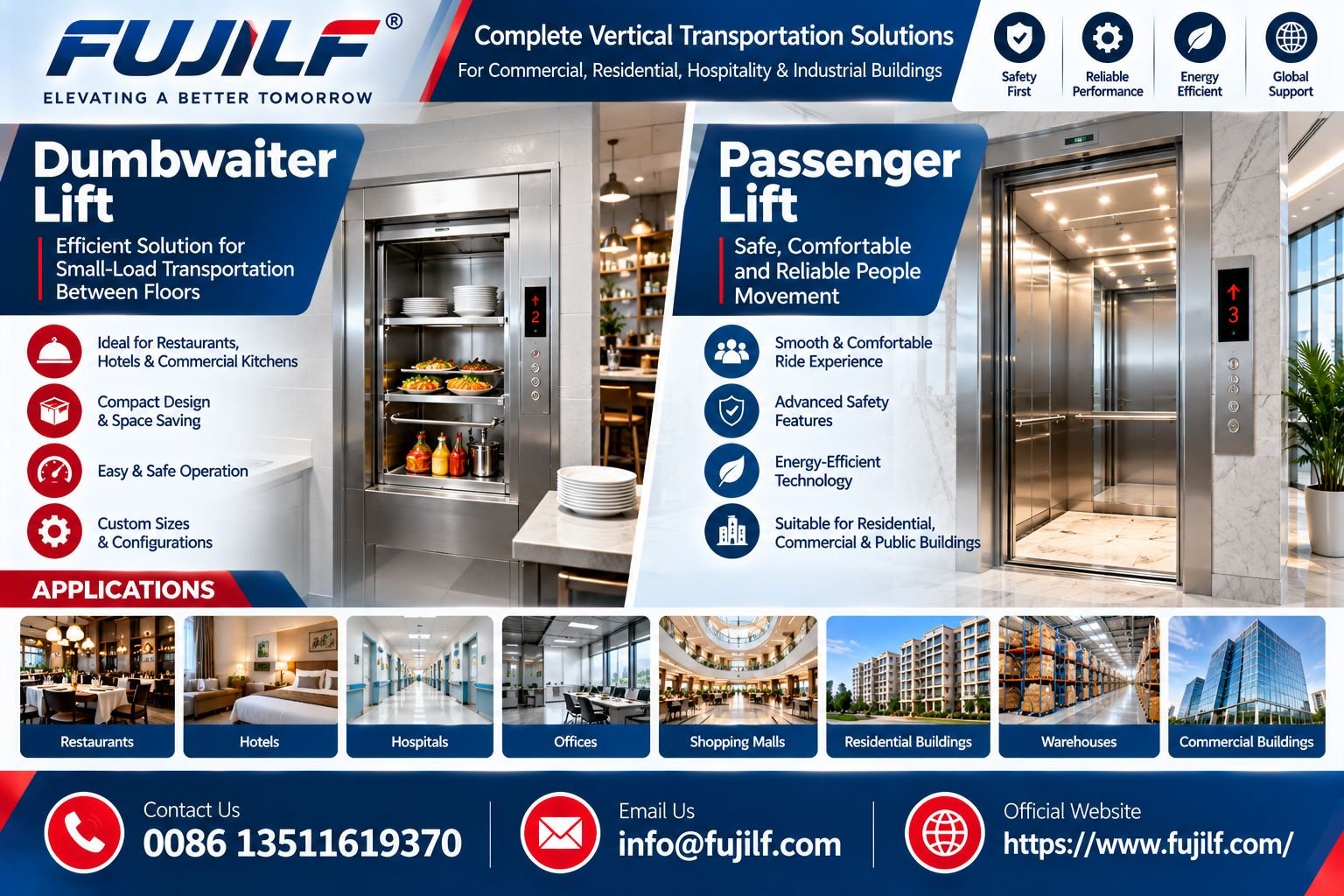
A dumbwaiter lift provides a compact solution for transferring suitable books, documents, supplies, and other permitted materials between building levels.
Meanwhile, a passenger lift supports the movement of students, teachers, employees, and visitors, including individuals who require step-free access.
These systems perform different functions but can complement one another within a thoughtfully designed educational facility.
The central infrastructure challenge is creating transportation arrangements that reduce unnecessary manual handling while maintaining convenient, accessible routes throughout the building.
Why Educational Buildings Need Specialized Lifting Equipment
Educational facilities experience different transportation demands throughout their operating activities.
Students and faculty members move between classrooms, while administrative and support staff may need to transfer books, documents, teaching materials, and equipment.
When buildings rely entirely on staircases or passenger elevators for every activity, operational difficulties can arise.
A suitable dumbwaiter lift can support selected internal goods movements without requiring staff to carry permitted materials between floors.
Passenger elevators, meanwhile, should remain appropriately available for their intended occupants.
Important planning considerations include:
- Student accessibility: Supporting convenient movement between academic levels.
- Material transportation: Providing suitable arrangements for books and permitted supplies.
- Space efficiency: Selecting equipment compatible with the available building layout.
- Staff convenience: Reducing unnecessary manual carrying of suitable materials.
- Operational organization: Separating selected service activities from regular passenger circulation.
These considerations help educational institutions create more practical campus environments.
Dumbwaiter Lift Applications in Academic Libraries
Libraries are important learning resources where books, journals, files, and educational materials may need to move between floors.
In multi-level library facilities, transporting these materials manually can require considerable physical effort.
A dumbwaiter lift may provide a suitable solution for transferring permitted items between designated service points.
For example, library staff may use a compact goods lift to move approved book containers from a storage level to a processing area.
The installation must be designed according to the dimensions, weight, and characteristics of the intended loads.
A useful infrastructure planning principle explains:
However, a dumbwaiter is not suitable for transporting people or equipment beyond its approved specifications.
Its role must remain clearly defined within the building’s operational procedures.
Passenger Lift Accessibility Supports Inclusive Education
Accessibility is an essential part of educational building design.
Students, employees, and visitors may have different mobility requirements, making step-free transportation an important consideration.
A properly designed passenger lift can provide access to classrooms, offices, libraries, and other approved building levels.
Elevator planning should consider cabin dimensions, door clearances, control accessibility, and suitable communication features.
Depending on applicable regulations, relevant features may include visual floor indicators, audible announcements, and appropriately positioned operating controls.
Educational institutions should also consider how passengers approach elevator entrances and move through surrounding corridors.
A suitable elevator installation contributes to accessibility only when the connected routes are appropriately designed.
Why Goods and Passenger Transportation Must Remain Separate
Compact goods lifts and passenger elevators have different engineering purposes.
A dumbwaiter is designed exclusively for permitted materials and should never carry people.
Passenger elevators are designed and approved to transport occupants according to their rated capacity and operating requirements.
Separating these functions can support more organized building operations.
For example, administrative supplies may move through a designated goods-handling route while students use the passenger elevator.
However, equipment selection must consider the building’s actual transportation requirements.
Large educational equipment or accompanied loads may require a different certified lifting system rather than a compact dumbwaiter.
Smart Controls Can Support Organized Campus Operations
Modern lifting systems may include control features suited to their intended applications.
For goods lifts, suitable operating arrangements may include authorized landing controls, door interlocks, and equipment-status indications.
Passenger elevators may incorporate floor-selection controls, clear displays, and appropriate communication features.
Access management can also be relevant in educational buildings where certain service areas are restricted to authorized personnel.
However, control features must comply with equipment safety requirements.
A practical engineering principle states:
Technology should support safe operation rather than introduce unnecessary complexity.
Safety Planning Remains Essential in Educational Facilities
Lifting systems installed in schools and universities require appropriate safety provisions.
A dumbwaiter lift should incorporate the protective equipment required for its approved design, including suitable landing-door arrangements.
Only authorized personnel should operate equipment intended for restricted goods-handling activities.
Passenger elevators require appropriate safety systems, inspection procedures, and accessible operating arrangements.
Educational institutions should also establish suitable procedures for reporting equipment problems.
Faulty equipment must be assessed by qualified technicians before returning to service.
Emergency planning should follow applicable building and fire-safety requirements. Ordinary passenger elevators must not be assumed suitable for evacuation unless specifically approved for that purpose.
Maintenance Supports Reliable Educational Infrastructure
Regular maintenance helps educational institutions keep lifting equipment suitable for continued operation.
Goods-lift maintenance may involve checking door mechanisms, lifting components, controls, and protective arrangements.
Passenger elevator servicing includes inspection of applicable drive systems, doors, controls, and safety equipment.
Maintenance frequency should follow manufacturer recommendations and relevant regulations.
Clear inspection records can help facility administrators identify recurring issues and coordinate professional servicing.
The objective is to maintain equipment reliability while supporting safe campus operations.
Choosing the Right Lift for an Educational Facility
Before investing in lifting equipment, educational institutions should assess their building requirements.
Important questions include:
- What materials or passengers must the system transport?
- What are the maximum intended loads and required dimensions?
- Does the building provide suitable installation space?
- Which accessibility and safety requirements apply?
- What professional maintenance support will be available?
These questions help administrators distinguish between compact goods-handling equipment and passenger transportation systems.
The most suitable choice should reflect actual operational needs rather than equipment size or purchasing price alone.
Frequently Asked Questions (FAQs)
1. What is a dumbwaiter lift?
A dumbwaiter lift is a compact lifting system designed to transport permitted goods between floors. It can be suitable for selected applications in libraries, offices, commercial facilities, and other buildings.
2. Can educational institutions install a dumbwaiter lift?
Yes. Educational institutions may install a dumbwaiter for approved goods-handling applications when the building and equipment meet applicable installation and safety requirements.
3. Why is a passenger lift important in schools and universities?
A passenger lift supports accessible movement between building levels, particularly for individuals who need step-free access.
4. Can students travel inside a dumbwaiter?
No. A dumbwaiter is intended for goods only and must never be used to transport students, employees, or other passengers.
5. What should institutions consider before installing lifting equipment?
Institutions should assess transportation needs, rated capacity, available space, accessibility requirements, safety compliance, and maintenance arrangements.
Media Contact
Department: Business Enquiries & Vertical Transportation Solutions
Industry: Passenger Elevators, Dumbwaiter Lifts & Lifting Equipment
Contact: 008613511619370
Email: info@fujilf.com
Official Website: https://www.fujilf.com/