Food processing equipment manufacturers are placing greater emphasis on hygienic construction, material compatibility, and practical machinery design. As food production facilities seek reliable equipment, metal fabrication processes play an important role in creating durable components that are easier to inspect, maintain, and clean.
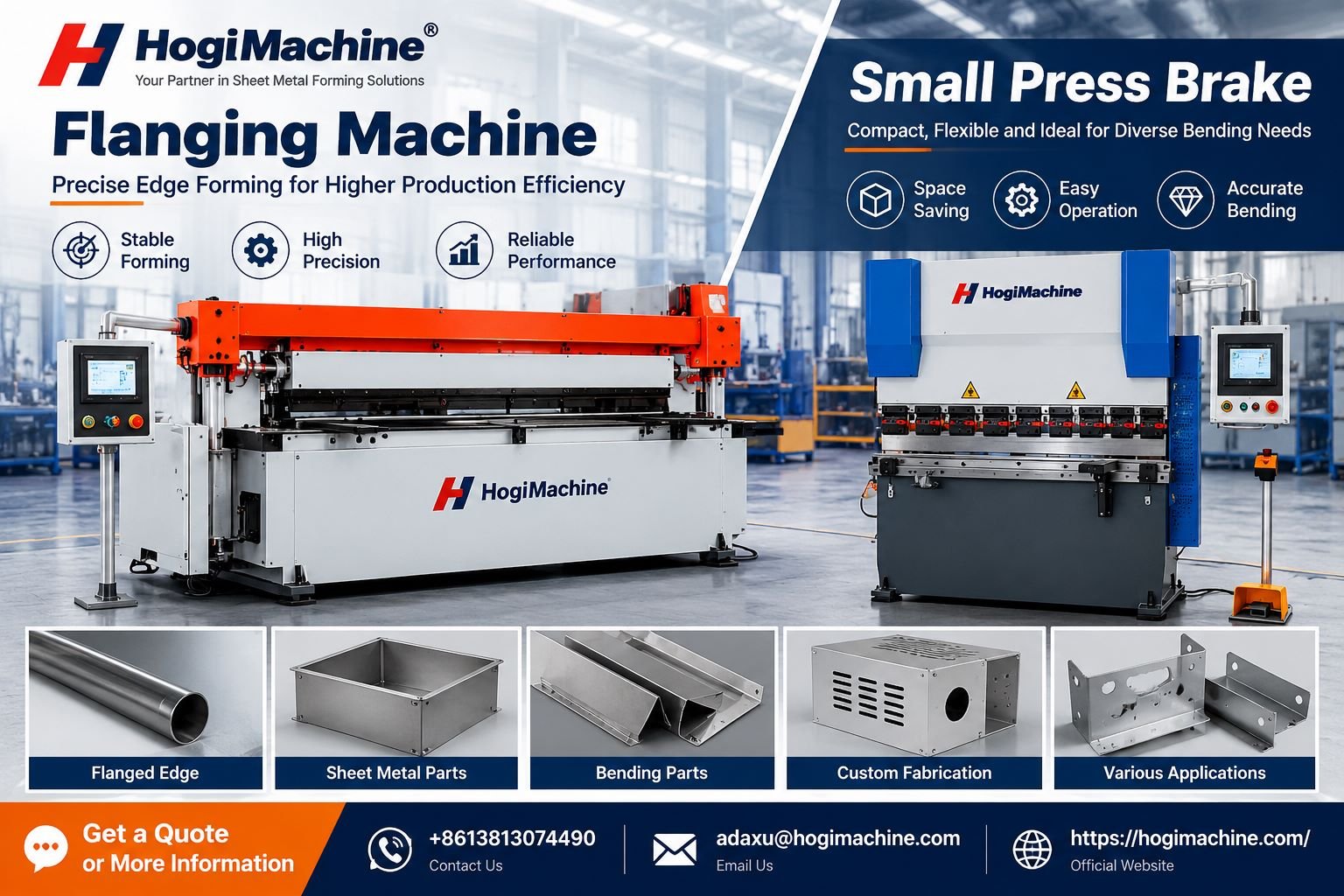
A Flanging machine supports specialised edge-forming operations for suitable metal vessels, containers, and processing equipment components.
Meanwhile, a small press brake helps manufacturers produce accurately bent stainless steel panels, machinery covers, mounting brackets, and equipment housings.
These machines serve different manufacturing purposes, but both can support the development of food processing machinery when applied correctly.
For equipment manufacturers, stainless steel fabricators, and industrial machinery suppliers, understanding the relationship between forming accuracy and hygienic product design can improve manufacturing decisions.
Why Food Processing Machinery Requires Careful Metal Fabrication
Food processing facilities use equipment for mixing, storing, transferring, and handling different products.
These applications can involve moisture, frequent cleaning, and exposure to substances that affect material performance.
Poorly designed metal components may create unnecessary gaps, difficult-to-clean areas, or assembly problems.
Manufacturers must therefore consider surface condition, material selection, joint construction, and accessibility.
Accurate forming supports these requirements by helping produce components that match approved engineering designs.
However, hygienic suitability depends on the complete equipment design, not metal-forming accuracy alone.
What Is a Flanging Machine?
A Flanging machine is industrial metal-forming equipment used to bend or shape the edges of compatible workpieces into specified flange profiles.
Depending on the model, it may process circular or cylindrical metal components and other supported geometries.
In food equipment fabrication, appropriate flanging operations can assist in manufacturing vessel edges, container components, and selected joining features.
These formed edges may contribute to structural requirements or preparation for subsequent assembly.
However, equipment capabilities vary considerably.
Manufacturers should confirm suitable workpiece dimensions, materials, thickness ranges, and flange profiles before selecting a machine.
How a Small Press Brake Supports Stainless Steel Equipment
A small press brake is compact sheet metal bending machinery that creates defined bends using compatible punches and dies.
It can be useful for producing smaller stainless steel components used in food processing equipment.
Examples include machinery panels, access covers, support brackets, control cabinet components, and protective guards.
Compact bending equipment may also support customised fabrication where workpieces fall within the machine’s rated capacity.
For stainless steel applications, tooling selection and material properties require careful consideration.
Suitable bend radii help reduce excessive deformation and unwanted surface damage.
The resulting component should be inspected against its approved manufacturing drawing.
Stainless Steel Selection and Hygienic Design
Stainless steel is commonly selected for food processing applications because suitable grades provide corrosion resistance and can support hygienic construction.
However, not every stainless steel grade is appropriate for every environment.
Material selection depends on the substances being processed, cleaning chemicals, operating conditions, and relevant requirements.
Certain applications may use grades such as 304 or 316 stainless steel, subject to engineering evaluation.
Metal-forming operations must also preserve the intended material performance.
Fabricators should avoid unnecessary surface contamination and damage.
Proper material specification is therefore essential before fabrication begins.
Why Edge Geometry Matters in Food Equipment
Edges and joints can influence the cleanability and durability of processing equipment.
Poorly positioned folds may create areas where residue or cleaning liquids become trapped.
A correctly engineered flange can support the intended joining arrangement, but an unsuitable flange may introduce unnecessary crevices.
Similarly, press brake bends should be positioned according to assembly and cleaning requirements.
Designers must consider how formed components connect with adjoining parts.
Where food-contact surfaces are involved, appropriate sanitary design principles and applicable requirements must guide the final construction.
The Role of Forming Equipment in Different Applications
Metal-forming requirements vary across food equipment categories.
Processing Vessels: Specialised edge-forming machinery may help prepare compatible vessel components for joining or assembly.
Commercial Kitchen Equipment: Compact press brakes can form suitable panels, supports, and equipment covers.
Packaging Machinery: Precisely bent brackets and guards can support mechanical assemblies.
Food Conveyor Systems: Sheet metal forming may be used for covers, mounting features, and other supporting components.
Storage Equipment: Appropriate forming processes can support selected metal containers, frames, and protective structures.
Each product requires independent evaluation of its technical and hygienic requirements.
Preventing Surface Damage During Fabrication
Stainless steel components may require careful handling throughout manufacturing.
Unsuitable tooling or excessive forming pressure can create scratches, marking, or unwanted deformation.
Surface damage may affect product appearance and, in certain applications, create cleaning difficulties.
Manufacturers should select appropriate tooling and handling methods for the material.
Protective measures may be useful when compatible with the forming process.
After fabrication, inspection should confirm that the surface meets the intended requirements.
Additional finishing or treatment may be necessary depending on the application.
Joining and Assembly After Metal Forming
Metal forming is often followed by welding, fastening, or other assembly operations.
The quality of these operations can influence equipment strength and cleanability.
For food-contact applications, poorly designed joints may create crevices or inaccessible surfaces.
Manufacturers should therefore coordinate forming and joining requirements during engineering development.
For example, bend locations should allow suitable access for required welding or finishing.
A correctly formed component is only one element of a properly designed finished assembly.
Quality Inspection for Food Equipment Components
Quality inspection helps verify that fabricated parts meet engineering specifications.
Relevant checks may include dimensional accuracy, bend geometry, flange alignment, surface condition, and assembly compatibility.
For components requiring hygienic construction, additional inspection criteria may apply.
Manufacturers should establish acceptance requirements based on product function and applicable standards.
Representative samples can help confirm manufacturing suitability before repeated production.
Clear inspection procedures also support communication between equipment manufacturers and fabrication suppliers.
How to Select Suitable Metal Forming Machinery
Businesses evaluating forming equipment should consider:
- Material Compatibility: Confirm suitable stainless steel grades and thicknesses.
- Component Geometry: Review required flange profiles and bending dimensions.
- Tooling Quality: Select suitable tools for the intended forming operation.
- Surface Protection: Consider the risk of marking or contamination.
- Manufacturing Accuracy: Evaluate repeatability and dimensional requirements.
- Technical Support: Review equipment documentation, safety features, and maintenance support.
Representative forming trials can help identify whether a machine meets the intended manufacturing requirements.
Frequently Asked Questions (FAQs)
1. What is a Flanging machine used for?
A flanging machine forms suitable metal edges into specified profiles for joining, assembly, reinforcement, or specialised manufacturing applications.
2. What is a small press brake?
A small press brake is compact sheet metal bending equipment used to create defined bends in compatible metal components.
3. Can flanging machines process stainless steel?
Certain models can process suitable stainless steel materials, depending on machine capacity, workpiece geometry, and tooling.
4. Why is stainless steel commonly used in food processing equipment?
Suitable stainless steel grades offer corrosion resistance and can support hygienic equipment construction when correctly selected and fabricated.
5. How can manufacturers improve food equipment fabrication quality?
They should select appropriate materials, use compatible forming equipment, consider hygienic design, inspect finished components, and follow applicable requirements.
Media Contact
Department: Industrial Metal Forming and Fabrication Machinery Enquiries
Phone: +86 138 1307 4490
Email: daxu@hogimachine.com
Official Website: https://hogimachine.com/