
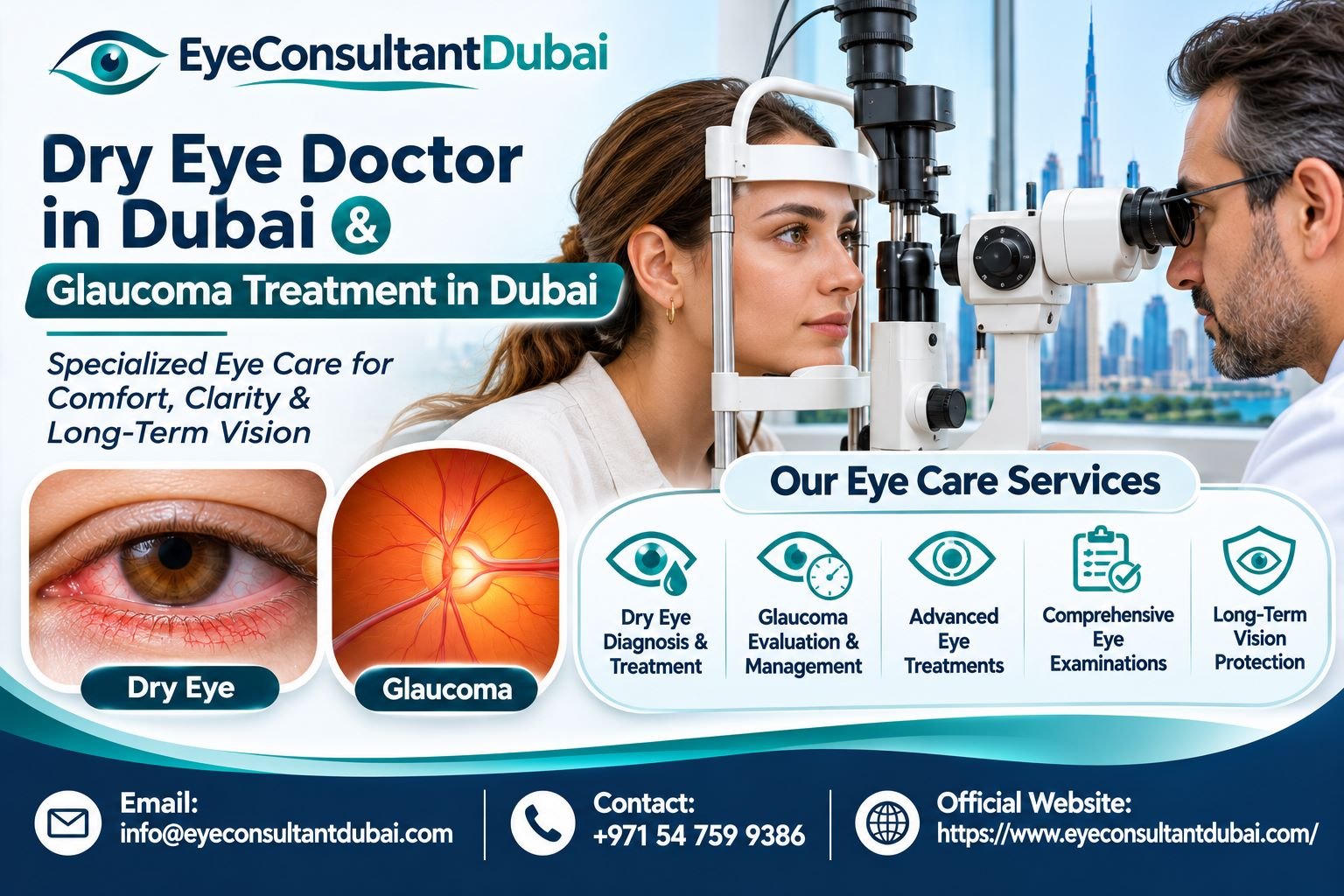
In Dubai, environmental conditions such as air conditioning, dust, low humidity, and prolonged digital screen exposure may contribute to dry eye symptoms.
For patients experiencing persistent irritation, consulting a dry eye doctor in dubai can help identify possible causes and determine an appropriate treatment approach.
Meanwhile, individuals receiving glaucoma treatment in dubai may require additional attention to ocular surface health, particularly when prescribed eye drops cause irritation or affect tear film stability.
These conditions are different, but their management can overlap.
Understanding the relationship between dry eyes, glaucoma medications, and individual eye health is important for maintaining comfort while protecting vision.
Why Dry Eye and Glaucoma Care May Overlap
Dry eye disease affects the tear film covering the eye’s surface.
Glaucoma involves damage to the optic nerve and may require treatment to reduce intraocular pressure.
Although these conditions affect different structures, some patients experience both.
Certain glaucoma medications and preservatives in eye drops can contribute to ocular surface discomfort.
This creates a challenge because patients need effective glaucoma management while also maintaining comfortable eyes.
An ophthalmologist can evaluate both conditions and consider appropriate treatment adjustments.
What Does a Dry Eye Doctor in Dubai Do?
A dry eye doctor in dubai is an eye care professional with expertise in diagnosing and managing dry eye symptoms.
Dry eye disease develops when the tear film becomes unstable because of inadequate tear production, excessive evaporation, or related ocular surface problems.
Common symptoms include burning, irritation, redness, fluctuating vision, and a gritty sensation.
Some people also experience excessive watering because irritation can trigger reflex tearing.
A comprehensive assessment helps determine whether symptoms are associated with dry eye disease, allergies, eyelid inflammation, or another eye condition.
Accurate diagnosis is important because similar symptoms can arise from different causes.
How Dubai’s Environment Can Affect Tear Film Health
Environmental conditions can influence the stability of the tear film.
Air-conditioned indoor spaces may reduce humidity, while outdoor dust and airflow can increase irritation.
Extended screen use can also reduce blinking frequency and contribute to tear evaporation.
However, environmental exposure is not the only cause of dry eye disease.
Age-related changes, medication effects, eyelid conditions, and underlying health problems may also play a role.
Patients should avoid assuming that persistent discomfort is caused exclusively by the weather.
Specialist assessment can help identify contributing factors and suitable management options.
Understanding the Relationship Between Glaucoma Drops and Dry Eyes
Glaucoma medications help control intraocular pressure, an important factor in managing many forms of the disease.
However, some prescribed eye drops may produce stinging, redness, dryness, or other ocular surface symptoms.
Preservatives found in certain multidose formulations can contribute to irritation in susceptible patients.
Not everyone experiences these effects.
When discomfort occurs, the ophthalmologist may evaluate medication tolerance, ocular surface findings, and available treatment alternatives.
Patients should never discontinue prescribed glaucoma medication independently because uncontrolled eye pressure may place vision at risk.
Why Ocular Surface Assessment Is Important
Dry eye diagnosis requires more than identifying redness or irritation.
An ophthalmologist may evaluate tear film stability, tear production, eyelid condition, and the surface of the cornea.
Diagnostic examinations can include tear breakup assessment, ocular surface staining, and other tests when appropriate.
The findings help distinguish tear deficiency from excessive tear evaporation.
This distinction matters because different causes may require different treatment approaches.
Dry Eye Symptoms Versus Glaucoma-Related Concerns
| Eye Health Concern | Dry Eye Disease | Glaucoma |
| Main Area Affected | Tear film and ocular surface | Optic nerve |
| Common Symptoms | Burning, irritation and fluctuating vision | Often no early symptoms |
| Important Assessment | Tear film and corneal examination | Eye pressure and optic nerve evaluation |
| Treatment Focus | Improving tear film and surface comfort | Reducing risk of further optic nerve damage |
| Possible Management | Lubricants and targeted dry eye therapy | Prescribed drops, laser or surgery |
These conditions can coexist and should be evaluated individually.
Available Treatment Options for Dry Eye Disease
Dry eye treatment depends on the cause and severity of symptoms.
Artificial tears may help improve lubrication and provide relief.
For patients with evaporative dry eye, management of meibomian gland dysfunction or eyelid inflammation may be appropriate.
Other options can include prescription anti-inflammatory treatments or additional ophthalmic procedures in selected cases.
Environmental adjustments and improved blinking habits may also provide support.
However, treatment should reflect the findings of an individual examination.
Persistent symptoms require professional assessment rather than indefinite reliance on over-the-counter products.
Understanding Glaucoma Treatment in Dubai
Glaucoma treatment in dubai aims to preserve remaining vision by controlling the factors contributing to optic nerve damage.
Depending on the type and severity of glaucoma, an ophthalmologist may recommend prescription eye drops, laser procedures, or surgery.
The most appropriate option depends on clinical findings, treatment response, and the patient’s overall eye health.
Some patients may require adjustments when medication-related discomfort interferes with treatment adherence.
Preservative-free formulations or alternative therapies may be considered when clinically appropriate.
A specialist must balance ocular comfort with effective pressure control.
Why Patient Communication Matters
Patients may hesitate to report irritation because they assume discomfort is unavoidable during glaucoma treatment.
However, persistent side effects deserve attention.
Explaining symptoms clearly helps an ophthalmologist assess whether they are related to medication, dry eye disease, or another problem.
Patients should inform their clinician about all eye drops they use, including over-the-counter lubricants.
Open communication supports informed treatment decisions and better medication adherence.
Practical Habits That May Support Eye Comfort
People experiencing dry eye symptoms can discuss several supportive measures with their ophthalmologist:
- Screen Awareness: Take regular visual breaks and blink fully.
- Airflow Management: Avoid direct air-conditioning drafts toward the eyes.
- Eye Drop Use: Follow prescribed instructions and use recommended formulations.
- Eyelid Hygiene: Maintain appropriate eyelid care when advised.
- Environmental Comfort: Consider suitable indoor humidity and reduced exposure to irritating airflow.
- Medical Review: Report persistent dryness, redness, or visual changes.
These measures complement, rather than replace, professional treatment.
When Is Urgent Eye Care Necessary?
Dry eye symptoms are commonly uncomfortable, but some eye problems require urgent assessment.
Sudden severe eye pain, marked redness, rapidly worsening vision, or a headache accompanied by nausea and visual disturbances may indicate a serious eye condition.
Acute angle-closure glaucoma is one possible emergency and requires immediate medical attention.
Patients should not assume every painful or red eye is caused by dryness.
Prompt evaluation is important when symptoms are severe, unusual, or associated with sudden visual changes.
Frequently Asked Questions (FAQs)
1. What does a dry eye doctor in Dubai treat?
A dry eye specialist evaluates tear film instability, ocular surface irritation, inadequate tear production, and related eyelid conditions.
2. Can glaucoma eye drops cause dry eyes?
Yes. Certain glaucoma medications or preservatives can contribute to dryness and irritation in some patients.
3. Can dry eye disease and glaucoma occur together?
Yes. A person may have both conditions, requiring treatment that addresses ocular comfort and optic nerve protection.
4. What are the available options for glaucoma treatment in Dubai?
Depending on the diagnosis, treatment may include prescription eye drops, laser procedures, or surgical interventions.
5. Should I stop glaucoma medication if my eyes become irritated?
No. Patients should consult their ophthalmologist before making medication changes because uncontrolled glaucoma can cause irreversible vision loss.
Media Contact
Department: Ophthalmology and Specialist Eye Care Enquiries
Enquiry Categories: Dry Eye Disease, Glaucoma Management, Ocular Surface Assessment, Eye Pressure Evaluation, Ophthalmology Consultation, and Vision Care.
Contact: +971 54 759 9386
Email: info@eyeconsultantdubai.com
Official Website: https://www.eyeconsultantdubai.com/